Yogyakarta, often affectionately called Jogja, is one of Indonesia's most fascinating destinations for travelers who want to experience more than beautiful scenery.
Located on the island of Java, Yogyakarta is a place where ancient kingdoms, royal traditions, traditional arts, local cuisine, creative communities, and everyday Javanese life continue to exist side by side.
From the magnificent temples of Borobudur and Prambanan to the historic streets of Kotagede, traditional batik workshops, vibrant markets, peaceful villages, and authentic local food, Yogyakarta offers an opportunity to discover a deeper side of Indonesia.
Whether you are visiting Indonesia for the first time, planning a family holiday, looking for an authentic cultural experience, or organizing an educational trip, this ultimate Yogyakarta travel guide will help you discover what makes Jogja so special.
Why Visit Yogyakarta?
Yogyakarta is often described as the cultural heart of Java, and there is a good reason for that.
The city has a remarkable connection to Javanese history and traditions. The Yogyakarta Sultanate continues to play an important role in the cultural identity of the region, while traditional arts such as batik, gamelan music, dance, crafts, and Javanese cuisine remain part of everyday life.
What makes Yogyakarta particularly interesting is that its culture is not confined to museums.
You can see it in the architecture of traditional houses, hear it in the sound of gamelan music, taste it in a local warung, watch artisans creating handmade crafts, and experience it by simply walking through an old neighborhood.
Yogyakarta is also surrounded by an extraordinary variety of landscapes and attractions, from ancient temples and volcanic landscapes to rural villages, rice fields, beaches, and forests.
For travelers who want to understand Indonesia beyond the usual tourist attractions, Yogyakarta is an excellent place to begin.
How Many Days Do You Need in Yogyakarta?
For a first visit, we recommend spending at least 3 days in Yogyakarta.
Three days gives you enough time to experience the city's major cultural attractions while also allowing some time for local food and cultural activities.
If you have four or five days, you can explore Yogyakarta at a slower pace and discover villages, local communities, traditional crafts, nature, and lesser-known areas.
2 Days in Yogyakarta
If you only have two days, focus on the highlights:
- Yogyakarta Palace
- Malioboro
- Kotagede
- Prambanan Temple
- Local cuisine
3 Days in Yogyakarta
Three days allows you to combine:
- Royal heritage
- Traditional culture
- Borobudur
- Prambanan
- Batik
- Local food
- A village or community experience
4–5 Days in Yogyakarta
With more time, you can add:
- Mount Merapi
- Traditional villages
- Local cooking experiences
- Cycling
- Art and craft workshops
- Nature experiences
- Wellness activities
- Beaches and rural destinations
The key is not to fill every hour with sightseeing.
Yogyakarta is a destination that rewards travelers who slow down and take the time to experience it.
Best Time to Visit Yogyakarta
Yogyakarta can be visited throughout the year, but the weather should be considered when planning outdoor activities.
The dry season is generally more convenient for activities such as temple visits, cycling, village tours, hiking, and exploring outdoor attractions.
The rainy season can bring heavier rainfall, but it can also be a beautiful time to experience Yogyakarta's greener landscapes and quieter atmosphere.
Another factor to consider is the local cultural calendar.
Yogyakarta hosts various cultural events, festivals, traditional performances, and community celebrations throughout the year. If you are interested in experiencing local culture, checking the event calendar before your trip can make your journey even more memorable.
The Best Things to Do in Yogyakarta
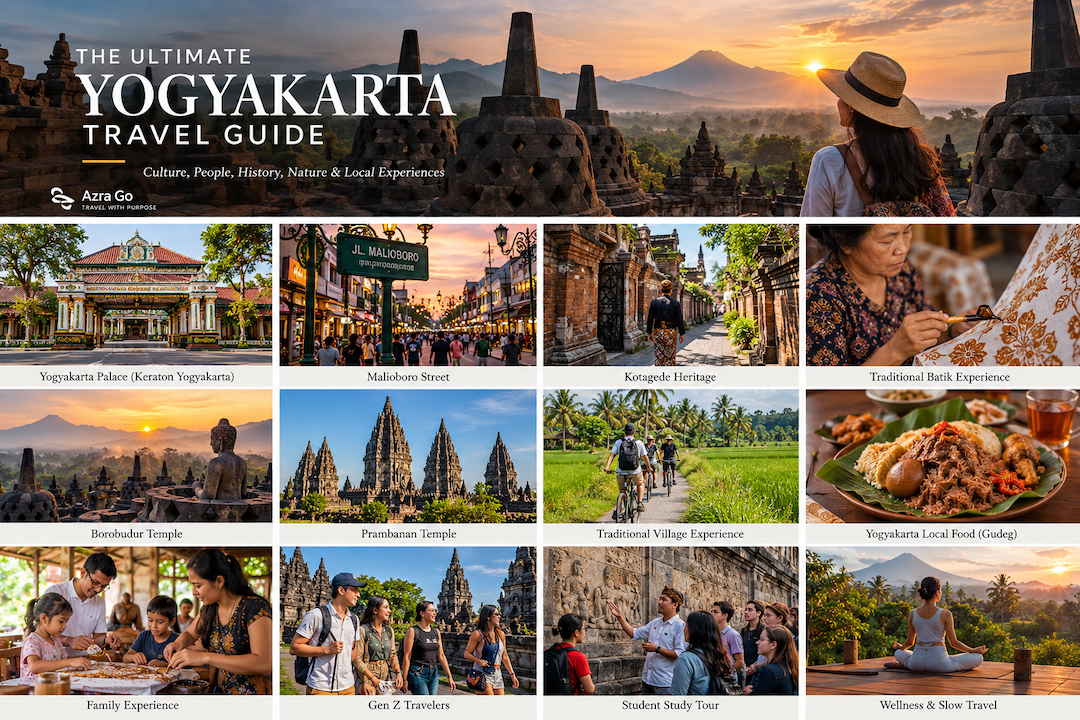
1. Visit the Yogyakarta Palace
One of the first places to visit in Yogyakarta is the Keraton Yogyakarta, or Yogyakarta Palace.
The palace is closely connected to the history and cultural identity of the Yogyakarta Sultanate.
Visitors can discover Javanese architecture, royal traditions, historical objects, traditional arts, and cultural ceremonies.
However, the most interesting part of visiting the Keraton is understanding the meaning behind what you see.
The architecture, layout, ornaments, and traditions all have cultural significance.
For this reason, visiting the palace with a knowledgeable local guide can make the experience much more meaningful.
2. Explore Malioboro
No visit to Yogyakarta would be complete without exploring Malioboro.
Malioboro is one of the city's most famous streets and is a lively center for shopping, food, street culture, and local life.
You can find:
- Batik
- Traditional souvenirs
- Local snacks
- Handicrafts
- Restaurants
- Street food
- Cafés
- Traditional markets
Nearby attractions include Beringharjo Market, Fort Vredeburg, and the Yogyakarta Palace.
Malioboro is particularly lively in the evening when the streets become filled with visitors, local residents, street vendors, and performers.
But remember: Malioboro is only one part of Yogyakarta.
To truly understand Jogja, you need to explore beyond the main tourist streets.
3. Discover the Historic Neighborhood of Kotagede
For travelers interested in history and traditional architecture, Kotagede is one of the most rewarding areas to explore.
Kotagede was historically associated with the Mataram Sultanate and remains known for its heritage buildings, traditional houses, narrow streets, old mosques, and silver craftsmanship.
Walking through Kotagede feels very different from walking through modern Yogyakarta.
You may discover traditional Javanese houses hidden behind small streets, local food stalls, artisan workshops, and communities that have lived in the area for generations.
A walking tour or cycling tour with a local guide is an excellent way to explore the area.
4. Experience Traditional Batik
Batik is one of Indonesia's most recognizable cultural traditions and has a particularly strong connection with Java.
But visiting a batik shop is very different from actually learning how batik is made.
A genuine batik experience can include meeting local artisans, learning about traditional motifs, watching the wax application process, and trying to create your own batik design.
You can also learn about the meanings behind different patterns and how traditional techniques have been passed down through generations.
For families and children, a batik workshop can be both educational and enjoyable.
For international travelers, it offers something even more valuable: an opportunity to interact directly with local artisans.
5. Visit Borobudur Temple
Although Borobudur is located in Central Java rather than Yogyakarta Province, it is one of the most popular destinations included in a Yogyakarta itinerary.
Borobudur is one of the world's most important Buddhist monuments and is famous for its monumental architecture, stupas, and intricate stone reliefs.
A visit to Borobudur can be approached in different ways.
You can simply visit the temple and admire its architecture, or you can take the opportunity to learn more about Buddhist philosophy, ancient Javanese history, architecture, and the stories depicted in the temple's reliefs.
For a deeper experience, combine Borobudur with a visit to a nearby village.
You might cycle through the countryside, meet local residents, learn traditional crafts, or enjoy a local meal.
This combination allows travelers to experience both the ancient heritage of Java and the living communities surrounding it.
6. Explore Prambanan Temple
Prambanan is another essential destination for anyone visiting Yogyakarta.
Unlike Borobudur, which is associated with Buddhist heritage, Prambanan is an important Hindu temple complex.
Its tall, dramatic towers and intricate reliefs make it one of the most impressive historical sites in Indonesia.
A visit to Prambanan can be combined with other cultural experiences in the surrounding area.
Instead of simply visiting the temple, consider adding a local lunch, village experience, traditional craft activity, or cultural performance to your itinerary.
This creates a more complete understanding of the region and its history.
7. Experience Yogyakarta's Traditional Villages
Some of the most memorable experiences in Yogyakarta can be found outside the city center.
Yogyakarta is surrounded by traditional villages where visitors can experience a slower pace of life and learn about local communities.
Depending on the destination, village experiences may include:
- Cycling through rice fields
- Traditional cooking
- Farming activities
- Batik making
- Traditional crafts
- Local food
- Village walks
- Traditional games
- Community activities
- Home visits
These experiences provide an opportunity to see another side of Indonesia.
Instead of simply photographing a traditional village, you can actually participate in its daily activities.
Yogyakarta Food Guide
Food is an essential part of experiencing Yogyakarta.
The city's cuisine reflects the flavors and traditions of Central Java, with dishes that are often characterized by sweet, savory, and aromatic flavors.
Gudeg
Perhaps the most famous food associated with Yogyakarta is gudeg.
Made primarily from young jackfruit cooked with coconut milk and spices, gudeg is traditionally served with rice and various side dishes.
There are different styles of gudeg, and trying it at a local restaurant or traditional food stall is an essential Yogyakarta experience.
Bakmi Jawa
Bakmi Jawa is a traditional Javanese noodle dish commonly prepared with noodles, vegetables, egg, and chicken.
It is often cooked to order using a traditional charcoal stove, giving the dish a distinctive flavor.
Sate Klathak
Sate Klathak is a famous grilled goat dish associated with the Bantul area.
Unlike many Indonesian satay dishes, Sate Klathak uses minimal seasoning, allowing the flavor of the meat to stand out.
Traditional Market Snacks
Don't forget to explore traditional markets and try jajan pasar, a variety of traditional Indonesian snacks made from ingredients such as rice flour, coconut, palm sugar, and banana.
Trying local snacks is one of the easiest ways to experience everyday Indonesian food culture.
Where to Stay in Yogyakarta
Choosing the right area to stay depends on the type of experience you want.
Malioboro
Malioboro is convenient for first-time visitors who want easy access to shopping, restaurants, markets, and central attractions.
Prawirotaman
Prawirotaman is popular with international travelers and is known for its cafés, restaurants, relaxed atmosphere, and independent travel scene.
Kotagede
Kotagede is an interesting option for travelers who prefer heritage, traditional architecture, and a quieter environment.
Sleman
Sleman is suitable for travelers interested in nature, Mount Merapi, resorts, and longer stays.
Bantul
Bantul is ideal for travelers who want to experience villages, crafts, local communities, and rural tourism.
Getting Around Yogyakarta
Yogyakarta has several transportation options, including taxis, ride-hailing services, local buses, motorcycles, bicycles, and private cars.
For travelers staying in the city center, many attractions can be reached relatively easily.
However, if you plan to visit multiple destinations outside the city, especially villages, temples, rural areas, and Mount Merapi, a private vehicle with a driver can be more comfortable and efficient.
For heritage neighborhoods such as Kotagede, walking or cycling can be a much better option.
Sometimes the best way to discover Yogyakarta is simply to slow down and walk.
The Ultimate 3-Day Yogyakarta Itinerary
Day 1: Discover the Heart of Yogyakarta
Start your journey with the cultural heart of the city.
Morning
Visit Yogyakarta Palace and explore the surrounding heritage area.
Afternoon
Experience traditional batik and meet local artisans.
Evening
Explore Malioboro and Beringharjo Market before enjoying a traditional Javanese dinner.
Experience focus: Royal heritage, traditional arts, shopping, and local food.
Day 2: Borobudur and Local Village Life
Start early and travel toward Borobudur.
Spend the morning exploring the temple and learning about its history and architecture.
After lunch, continue to a nearby village for a local experience.
Depending on the community, you might enjoy cycling, traditional cooking, farming, handicrafts, or simply meeting local residents.
Return to Yogyakarta in the evening.
Experience focus: Ancient heritage, countryside, community, and local life.
Day 3: Prambanan and Ancient Java
Begin the day at Prambanan Temple.
After exploring the temple, enjoy lunch at a local restaurant before continuing your journey.
In the afternoon, choose an experience based on your interests:
- Kotagede heritage
- Silver craftsmanship
- Traditional village
- Creative arts
- Mount Merapi
- Local culinary experience
End the day with a traditional cultural performance or local dinner.
Experience focus: Ancient kingdoms, craftsmanship, and contemporary Javanese culture.
A 5-Day Cultural Yogyakarta Itinerary
If you have more time, slow down and explore deeper.
Day 1
Yogyakarta Palace → traditional market → batik workshop → Malioboro
Day 2
Borobudur → village experience → local lunch → traditional cooking
Day 3
Prambanan → Ratu Boko → cultural experience
Day 4
Kotagede → heritage walking tour → silver workshop → traditional food
Day 5
Mount Merapi or a traditional village → wellness experience → local dinner
This type of itinerary allows you to see the famous attractions while also experiencing the culture and communities that make Yogyakarta unique.
Yogyakarta for Families
Yogyakarta is an excellent destination for families because there are many activities that can be adapted to different ages.
Instead of visiting museums and temples all day, families can mix sightseeing with hands-on activities.
Children can:
- Make batik
- Learn traditional cooking
- Ride bicycles through villages
- Explore traditional markets
- Learn local crafts
- Participate in traditional games
- Discover ancient temples
- Experience rural life
The goal is to make the journey interactive.
Children often remember the things they did much more than the places they simply visited.
Yogyakarta for Young Travelers and Gen Z
Yogyakarta has a vibrant creative culture that makes it particularly interesting for younger travelers.
Beyond famous tourist attractions, young travelers can discover:
- Independent cafés
- Creative communities
- Art spaces
- Traditional markets
- Street food
- Local fashion
- Music
- Traditional crafts
- Heritage neighborhoods
- Village experiences
For younger travelers, the best Yogyakarta experience may not be about visiting as many attractions as possible.
Instead, it can be about discovering interesting people, places, stories, food, and experiences.
Yogyakarta for International Students
Yogyakarta is also an excellent destination for educational travel.
A study tour can combine tourism with real-world learning.
Students can explore:
History and Archaeology
Borobudur, Prambanan, Ratu Boko, and other historical sites provide opportunities to learn about ancient Java and the development of religious and cultural traditions.
Traditional Arts
Students can learn about:
- Batik
- Gamelan
- Traditional dance
- Silver craftsmanship
- Wood carving
- Local culinary traditions
Sustainability
Students can visit tourism villages and learn about:
- Community-based tourism
- Agriculture
- Local entrepreneurship
- Environmental conservation
- Sustainable tourism
Cultural Exchange
Perhaps most importantly, students can interact directly with local communities and experience everyday life in Indonesia.
This makes Yogyakarta an excellent destination for international schools and universities looking for educational programs that combine classroom learning with real-world experiences.
Wellness and Slow Travel in Yogyakarta
Yogyakarta is also a destination for travelers interested in wellness and slow travel.
Wellness experiences can be combined with nature and local culture.
A wellness itinerary might include:
- Morning yoga
- Meditation
- Village walks
- Traditional herbal drinks
- Healthy local food
- Nature experiences
- Traditional wellness practices
- Relaxation in the countryside
Instead of treating wellness as something separate from travel, Yogyakarta allows visitors to connect wellness with the natural environment and local culture.
Responsible Travel in Yogyakarta
Traveling responsibly is an important part of experiencing Yogyakarta.
When visiting local communities, remember that you are entering people's homes, workplaces, and cultural spaces.
Whenever possible:
Support local artisans
Buy directly from local craftspeople and small businesses.
Choose local guides
Local guides provide cultural context while helping create income within the community.
Respect religious and cultural sites
Dress appropriately and follow local rules when visiting temples, mosques, palaces, and other sacred places.
Ask before photographing people
Especially when photographing ceremonies, artisans, children, or private activities.
Support community-based tourism
Choosing locally managed experiences can help ensure that tourism benefits the communities you visit.
Tips for First-Time Visitors to Yogyakarta
Start Your Day Early
Morning is usually a more comfortable time for outdoor sightseeing, especially during warmer months.
Don't Overpack Your Itinerary
Trying to visit too many attractions in one day can turn a cultural experience into a race against the clock.
Try Local Food
Don't spend your entire trip eating familiar international dishes.
Be adventurous and try local specialties.
Dress Respectfully
When visiting temples, palaces, villages, and religious sites, dress appropriately and follow local customs.
Carry Some Cash
Some small restaurants, market vendors, and local businesses may still prefer cash.
Learn a Few Indonesian Words
Simple words such as:
Terima kasih — Thank you
Selamat pagi — Good morning
Permisi — Excuse me
Berapa harganya? — How much is it?
can make interactions with local people more enjoyable.
Take Time to Explore Without a Schedule
Some of the best discoveries in Yogyakarta happen when you are not rushing to the next attraction.
Beyond the Famous Tourist Attractions
Yogyakarta's most famous attractions are famous for a reason.
Borobudur is extraordinary.
Prambanan is impressive.
Malioboro is vibrant.
The Keraton is historically significant.
But there is another side of Yogyakarta that deserves just as much attention.
It is found in:
- Small villages
- Traditional markets
- Family-owned restaurants
- Artisan workshops
- Local neighborhoods
- Rice fields
- Traditional houses
- Community events
- Local food stalls
- Creative spaces
This is where travelers begin to see Yogyakarta not simply as a destination, but as a living culture.
Experience the Real Yogyakarta with Azra Go
At Azra Go, we believe that traveling is not only about seeing beautiful places.
It is about understanding them.
Our Yogyakarta experiences are designed for travelers who want to go beyond conventional sightseeing and discover the culture, people, traditions, food, history, and everyday life of Java.
Whether you are traveling as an individual, couple, family, school group, university, corporate group, or international travel agency, we can create a customized journey around your interests.
Our experiences can include:
- Cultural tours
- Local village experiences
- Batik workshops
- Culinary experiences
- Heritage tours
- Educational travel
- Study tours
- Wellness and retreat programs
- Private tours
- Customized itineraries
- Destination management services
Instead of simply checking attractions off a list, let us create a journey that allows you to meet the people, discover the stories, and experience the culture behind Yogyakarta.
Ready to experience Yogyakarta differently?
Contact Azra Go
WhatsApp: +62 851 2155 6958
Email: hello@azrago.com
Discover Yogyakarta. Experience Java. Travel with purpose.
Frequently Asked Questions About Yogyakarta
Is Yogyakarta worth visiting?
Absolutely. Yogyakarta offers a unique combination of cultural heritage, ancient temples, traditional arts, local cuisine, villages, nature, and contemporary creative culture.
How many days should I spend in Yogyakarta?
Three days is a good starting point for first-time visitors. Four to five days allows you to explore more slowly and include villages, workshops, nature, and local experiences.
What is Yogyakarta famous for?
Yogyakarta is famous for Javanese culture, the Sultan's Palace, Malioboro, batik, traditional arts, local cuisine, Borobudur, Prambanan, and its historic neighborhoods.
Is Borobudur in Yogyakarta?
Borobudur is located in Central Java, not Yogyakarta Province. However, it is commonly included in Yogyakarta travel itineraries because of its proximity to the city.
Is Yogyakarta suitable for families?
Yes. Families can enjoy temples, cultural workshops, traditional food, cycling, villages, nature, and educational activities.
Is Yogyakarta good for international students?
Yes. Yogyakarta offers excellent opportunities for educational travel covering history, archaeology, culture, traditional arts, sustainability, agriculture, creative industries, and community-based tourism.
What food should I try in Yogyakarta?
Start with gudeg, bakmi Jawa, sate klathak, traditional market snacks, and other Javanese dishes.
Should I hire a local guide in Yogyakarta?
A local guide can be particularly valuable for cultural experiences because they can explain the history, traditions, stories, architecture, and customs behind the places you visit.
What is the difference between Jogja and Yogyakarta?
Jogja is the commonly used short name for Yogyakarta. Both refer to the same destination.
Final Thoughts
Yogyakarta is not a destination that needs to be rushed.
Take the time to walk through an old neighborhood.
Sit down for a traditional meal.
Talk to a local artisan.
Learn how batik is made.
Cycle through a village.
Listen to the stories behind an ancient temple.
Watch the sunset.
And allow yourself to experience Java at a slower pace.
Because the best memories of Yogyakarta are not always found at the most famous attractions.
Sometimes they are found in a conversation with a local person, a meal shared around a small table, the sound of traditional music from a village, or the experience of learning something you had never tried before.
Don't just visit Yogyakarta. Experience it.